
You have no items in your shopping cart.
Assay Development & Diagnostics
Vector-Borne & Tropical Diseases
High-quality matched pairs, antigens, and antibodies for the development of sensitive diagnostic assays.
1. A Global Health Burden
Vector-borne and tropical diseases occur principally in the tropics, where vectors such as blood-sucking arthropods (mosquitoes, ticks, or fleas) thrive in hot, humid conditions.
In practice, these severe diseases are most prevalent in some of the poorest regions of the world, disproportionately affecting individuals in remote rural areas, urban slums, and conflict zones. The complex geographical distribution of these diseases makes it exceptionally difficult to treat and control outbreaks, properly manage underlying infection routes, and deploy vaccines. Therefore, it is critically essential that the scientific community continues to develop low-cost, highly sensitive means of early diagnosis with low cross-reactivity to ensure treatments are rapidly and effectively deployed.
The Scale of the Challenge
- Vector-borne diseases account for more than 17% of all infectious diseases globally, directly causing more than 700,000 deaths annually.
- More than 3.9 billion people in over 128 distinct countries are currently at risk of contracting dengue, with 96 million cases estimated per year.
- Malaria brutally causes more than 400,000 deaths every single year globally, the vast majority being children under 5 years of age.
- Other devastating diseases such as Chagas disease, leishmaniasis, and schistosomiasis physically affect hundreds of millions of people worldwide.
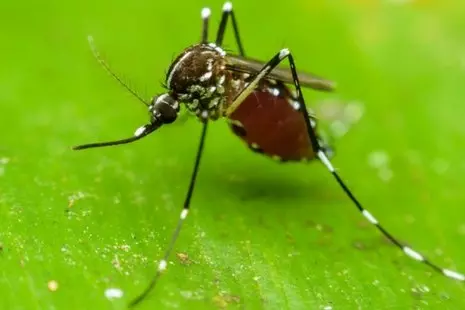
Mosquito. A primary vector for tropical diseases such as Dengue and Malaria.
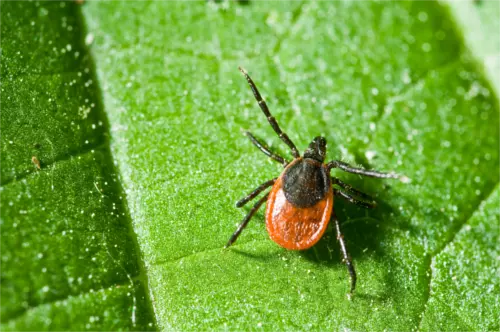
Deer tick (Ixodes scapularis), a primary vector for Lyme disease.
2. Common Pathogen Targets
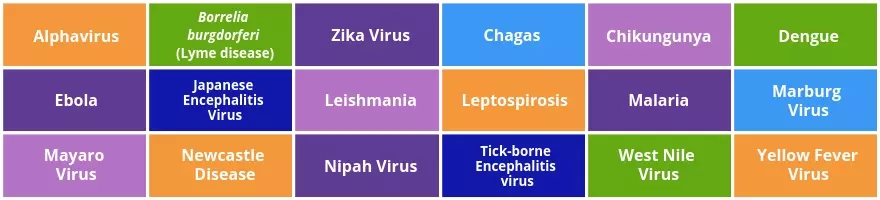
To aggressively assist in diagnostic development, Biorbyt offers a wide, specialized range of antigens and antibodies to assist researchers in the design of robust tests such as solid-phase assays, dip-sticks (ELISAs), particle agglutination, and lateral flow applications for the following targets:
- Alphavirus
- Borrelia burgdorferi
- Borrelia garinii
- Chagas
- Chikungunya
- Dengue
- Ebola
- Japanese Encephalitis
- Leishmania
- Leptospirosis
- Malaria
- Marburg Virus
- Mayaro Virus
- Newcastle Disease
- Nipah Virus
- Tick-borne Encephalitis
- West Nile Virus
- Yellow Fever Virus
- Zika Virus
3. Validated Matched Antibody Pairs
Our strictly validated matched pairs are optimized for reliable capture and detection in Sandwich ELISA and Lateral Flow applications.
4. Tips and Tricks for Working with Flaviviruses in EIA Assays
Many vector-borne diseases are directly caused by aggressive viruses from the genus Flavivirus of the family Flaviviridae. This complex family fundamentally comprises over 70 distinct viruses, including dengue (DEN) viruses, Japanese encephalitis (JE) virus, St. Louis encephalitis (SLE) virus, and yellow fever (YF) virus, many of which are critical human pathogens.
As all Flaviviruses are antigenically related to various genetic degrees, it is absolutely essential that when developing a new diagnostic immunoassay, the capture and detection antibodies utilized are entirely specific to the single disease of interest. The remarkably high genetic homology between the different virus species unfortunately means that the development of specialized antibodies with zero cross-reactivity to other flavivirus-caused diseases is technically difficult.
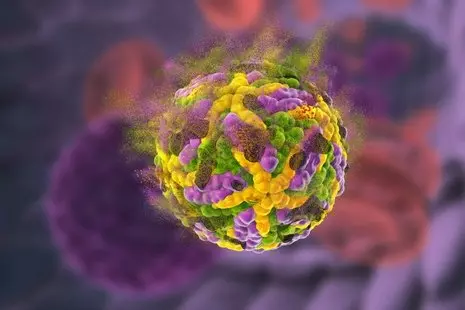
Zika flavivirus structure
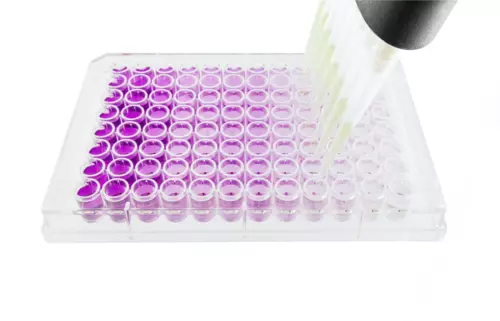
Enzyme Immunoassay (EIA) plate preparation
Structural Considerations for Target Selection
Flaviviruses are functionally simple enveloped viruses containing highly conserved single-stranded RNA intimately associated with a standard capsid protein. All share distinct morphological symmetry, and their viral genomes explicitly encode a single, large polyprotein that is proteolytically processed to dynamically yield structural domains—E (Envelope), prM (precursor of membrane (M)), and the Capsid protein. They also robustly contain several highly reactive non-structural (NS) proteins such as NS1, NS2, NS2b, NS3, NS4a, NS4b, and NS5.
It is crucial to note that the primary dominant protein is the Envelope protein (E), which is presented heavily on the immediate surface of the viron. However, it contains multiple highly conserved regions, meaning that isolated antibodies directed to Envelope proteins are often severely cross-reactive to totally separate serotypes and diseases.
Conversely, the NS1 protein is a highly glycosylated, membrane-bound secreted glycoprotein that performs specialized replicative and immune-evasive functions. Fortunately, circulating NS1 antigens can be reliably detected extremely early on in acute infection and serve as an excellent target for highly sensitive early diagnostic tests. Furthermore, NS1 is structurally serotype-specific, so the accurate detection of NS1 antigens uniquely enables complex virus serotyping utilizing ELISA.
How to Improve Assay Specificity
In order to forcefully improve the ultimate specificity of a clinical assay, it is mechanically vital to completely remove cross-reacting antibodies that can rapidly lead to disastrous false positives by binding the host antigen non-specifically.
This rigorous specificity can be functionally achieved via deploying defined epitope blocking ELISAs that permit the accurate clinical differentiation of complex flaviviral infections by specifically targeting unique, non-overlapping epitopes on NS1 or E proteins. If strictly controlled, low concentrations of unconjugated antigens from potentially cross-reactive competitor serotypes are thoughtfully included in the assay diluent, these will aggressively block the improper binding of the cross-reactive antibodies to the diagnostic target antigen, thereby massively increasing the ultimate assay specificity.
6. References
- Vector-borne diseases. World Health Organization. Available at: https://www.who.int/news-room/fact-sheets/detail/vector-borne-diseases. (Accessed: 25th January 2019)
- Kuno, Goro, Chang, G.-J. J., K. Richard, T., Nick, K. & C. Bruce, C. Phylogeny of the Genus Flavivirus. J. Virol. 72, 73–83 (1998).
- Heinz, F. X. & Stiasny, K. The Antigenic Structure of Zika Virus and Its Relation to Other Flaviviruses: Implications for Infection and Immunoprophylaxis. Microbiol. Mol. Biol. Rev. 81, e00055-16 (2017).